Want to know how much your website project would cost?

Create Brand Strategy Before Your Website Build

Team planning brand strategy at conference table

Brand strategy is the documented foundation that defines who you serve, what you stand for, and how you communicate before a single web page is designed. Without it, your website becomes a guessing game. Every layout decision, headline, and color choice gets made in a vacuum, and the result rarely connects with the customers you actually want. The smartest move any business owner or marketer can make is to create a brand strategy before the website build begins. This article walks you through exactly how to do that, from defining your audience to developing brand guidelines that hold up long after launch.

Why brand strategy must come before website design.

Website design is a deployment problem, not a discovery process. Your site should express a strategy that already exists, not figure one out on the fly. When you skip strategy and go straight to design, you end up with a site that looks fine but says nothing meaningful to the right people.

Brand strategy, brand identity, and web design are three distinct layers. Brand strategy defines the why and the who: your target audience, your market position, your brand promise, and your messaging pillars. Brand identity translates that into visual and verbal expression, including your logo, color palette, typography, and tone of voice. Web design deploys these elements into a functional site experience. Skipping the first two layers and jumping to design is the most common and most expensive mistake business owners make.

The pitfalls of weak or missing strategy show up fast:

  • Inconsistent messaging across pages, because no one agreed on what the brand actually says
  • Generic visual choices that could belong to any competitor in your category
  • Unclear user journeys because the site was not built around a defined customer profile
  • Costly redesigns within 12–18 months, once the business realizes the site does not reflect who they are

A strong brand strategy answers five core questions before design begins: Who is your ideal customer? Who are your meaningful competitors? What makes you genuinely different? What do you promise your customers? And what personality does your brand carry? Answering these questions first makes every downstream creative decision faster and more consistent.

How to create a brand strategy before your website build.

A focused brand strategy process takes 4–8 weeks and produces positioning statements, ideal customer profiles, messaging hierarchies, and character definitions that direct all downstream creative work, including web design. Here is a practical framework you can follow.

Step 1: Define your ideal customer profile

Start with a detailed profile of the person you most want to serve. Go beyond demographics. Document their goals, frustrations, buying triggers, and the language they use to describe their own problems. A well-built ideal customer profile (ICP) shapes every headline, every call to action, and every page on your site.
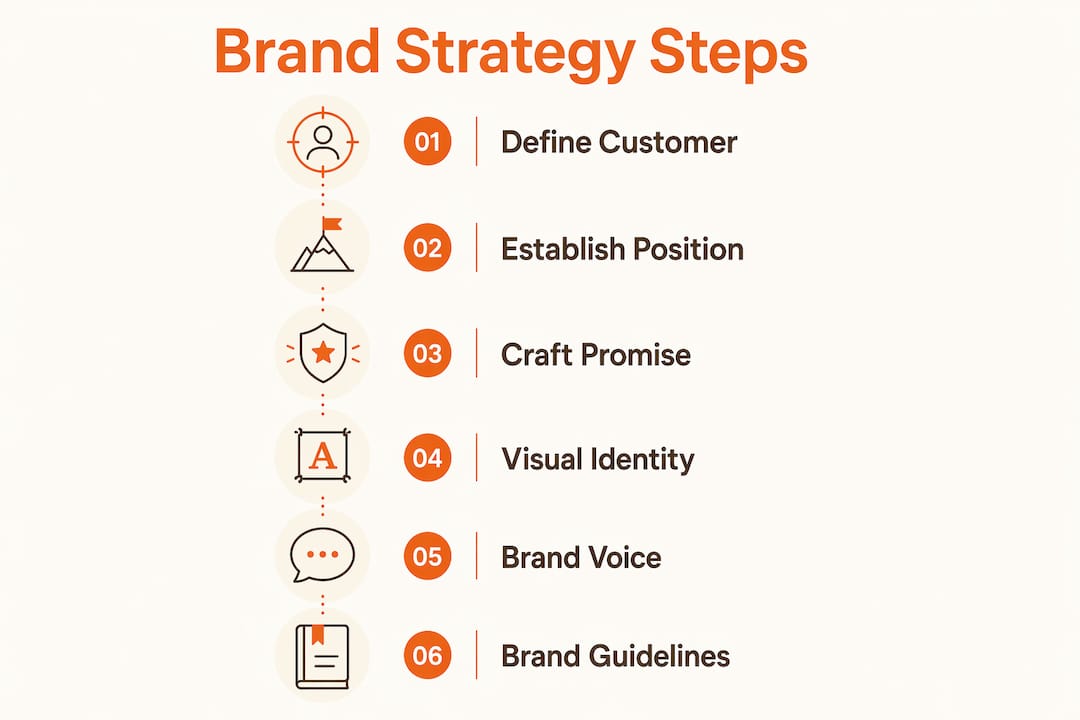
Infographic illustrating brand strategy development steps

Step 2: Establish your market position

Write a positioning statement that names your category, your audience, your differentiation, and the proof behind it. A useful format: “For [audience], [brand] is the [category] that [key benefit] because [reason to believe].” This statement becomes the filter for every design and content decision.

Woman creating ideal customer profile at home desk

Step 3: Craft your brand promise and messaging pillars

Your brand promise is the single commitment you make to every customer. Your messaging pillars are the three to five themes that support that promise across all content. These pillars give your web copy, blog posts, and social content a consistent backbone.

Step 4: Build your visual identity system

Your visual identity should reflect your strategy, not precede it. Once you know your positioning and personality, you can make informed decisions about logo direction, color palette, and typography. Document these choices with clear usage rules.

Step 5: Define your brand voice and tone

Write out how your brand sounds in different contexts: a homepage headline, a customer service reply, a social post. Include real examples of on-brand and off-brand writing. This is the most underused part of brand strategy and the one that most directly affects web copy quality.

Step 6: Develop brand guidelines built for daily use

Focus your brand guidelines on the 20% of rules that cover 80% of daily usage. Prioritize clear visual do’s and don’ts and accessible templates over exhaustive long-form documents. Early-stage founders especially should avoid heavy brand manuals and instead build a lean decision system that answers core brand questions quickly.

Pro Tip:

Build templates for your most common content formats, including social posts, email headers, and presentation decks, before your site launches. Templates increase adoption by making on-brand work easier than creating from scratch.

The table below shows what each brand strategy deliverable produces and how it feeds directly into your website build.

Brand strategy deliverableWhat it producesHow it feeds web design
Ideal customer profileAudience personas with goals and pain pointsInforms page structure and headline priorities
Positioning statementClear market differentiationShapes homepage hero and about page copy
Messaging pillarsCore content themesGuides service page structure and blog topics
Visual identity systemLogo, colors, typography rulesDirects layout, UI choices, and imagery style
Brand voice guideTone and writing examplesControls all web copy and microcopy

How does brand strategy integrate into the website design process?

Once your strategy is documented, web design becomes a much more direct task. Your messaging hierarchy tells the designer what content matters most on each page. Your visual identity system tells them which colors, fonts, and imagery styles to use. Your brand voice guide tells the copywriter exactly how to write.

The practical integration looks like this:

  • Homepage: Lead with your brand promise and primary differentiator. The hero section should speak directly to your ICP’s biggest goal or frustration.
  • Service or product pages: Use your messaging pillars to structure the content. Each pillar becomes a section or proof point.
  • About page: Express your brand personality and story in your documented voice and tone.
  • Navigation and user journey: Map the site architecture to the customer journey you defined in your ICP work. Where does your ideal customer start? What do they need to see before they convert?

The importance of branding before web design shows up most clearly in consistency. When your offline materials, social profiles, and website all draw from the same documented strategy, customers recognize you everywhere. When they do not, trust erodes. A comparison of the two approaches makes the difference concrete.

ApproachDesign processTypical outcome
Strategy firstDesign deploys documented decisionsConsistent, conversion-focused site
Design firstStrategy discovered during buildInconsistent messaging, frequent revisions

Common branding mistakes during the design phase include letting the designer choose the brand voice, picking colors based on personal preference rather than positioning, and writing copy before the messaging pillars are agreed upon. Each of these mistakes is avoidable when strategy is complete before design starts. Reviewing common website redesign mistakes can help you spot the patterns before they cost you a full rebuild.

Maintaining and evolving your brand strategy after launch.

Brand drift is the slow divergence of voice, visuals, and messaging over time. It happens when no one owns the brand and no one reviews it. Assigning a brand steward and scheduling annual or event-triggered reviews prevents this from happening.

Your brand guidelines should not live in a static PDF. Digital brand hubs that update automatically give your team and any outside vendors access to the latest assets at all times. This shift from PDF to living portal is the single biggest operational improvement most small businesses can make to their brand management.

Schedule a brand review after any major business event: a product launch, a market pivot, a significant change in your customer base, or a rebrand of a competitor. Outside of those triggers, an annual review keeps your guidelines current without creating unnecessary churn.

Pro Tip:

Treat your brand guidelines as an operating system for your team, not a reference document. Organize them by role so designers, copywriters, and salespeople each find what they need without reading the whole thing.

Use your website analytics and customer feedback to refine your messaging over time. If a particular service page has a high bounce rate, the problem is often a mismatch between what the page says and what your ICP actually needs to hear. Your brand strategy gives you the framework to diagnose and fix that gap quickly.

Early documentation prevents brand drift and speeds onboarding as your team grows. Starting with core voice, visual basics, and messaging, even in a small team, pays dividends every time you hire a new employee or bring on a contractor.

Key takeaways:

Brand strategy must be completed before web design begins because the website is a deployment of the strategy, not the place where strategy gets created.

PointDetails
Strategy precedes designComplete your ICP, positioning, and messaging before any design work starts.
Brand guidelines drive consistencyFocus guidelines on the 20% of rules that cover 80% of daily usage.
Templates increase adoptionBuild ready-to-use templates for social, email, and presentations before launch.
Living guidelines prevent driftUse a digital brand hub instead of a static PDF to keep assets current.
Assign a brand ownerSchedule annual reviews and event-triggered audits to keep strategy relevant.
From the Founder:

Why I think most businesses get this backwards.

Most businesses treat the website as the starting line for their brand. They hire a designer, pick colors they like, and write copy as they go. The result is a site that reflects the founder’s taste rather than the customer’s needs. I have seen this pattern repeat across dozens of projects, and the outcome is almost always the same: a redesign within two years, often at twice the original cost.

The businesses that get the most out of their website investment are the ones that arrive at the design phase with their strategy already documented. They know their ICP cold. They have a positioning statement they can recite. They have agreed on their messaging pillars. When that foundation is in place, the design process moves faster, the copy is sharper, and the final site actually converts.

The uncomfortable truth is that most founders skip strategy because it feels abstract. Writing a positioning statement does not feel like progress the way watching a homepage take shape does. But that impatience is expensive. A week spent on strategy saves months of revision and rework downstream.

My practical advice: do not wait until your strategy is perfect to start. A lean, documented brand strategy, even a one-page version covering your ICP, positioning, promise, and voice, is infinitely more useful than a blank page when your designer asks what the site should say. Start there, build from it, and treat it as a living document from day one.

- Bradley Givens, Co-Founder & Creative Director

How Expedition approaches brand strategy and web design together.

Expedition builds custom WordPress marketing websites with brand strategy as the foundation, not an afterthought. Before any design work begins, the team works through positioning, messaging, and identity to make sure the site reflects your actual business goals. If your brand identity needs development first, Expedition’s brand identity design services cover the full system, from logo and color to voice and guidelines. The same U.S.-based team handles both, so nothing gets lost in translation between strategy and execution. For small businesses ready to build on a clear brand foundation, Expedition offers affordable small business website design starting at $4,500 with no onboarding fees and month-to-month contracts.

FAQ

What is brand strategy and why does it matter for websites?

Brand strategy defines your target audience, market position, brand promise, and messaging before any design begins. Without it, your website lacks direction and fails to connect with the customers you want to reach.

How long does it take to develop a brand strategy?

A focused brand strategy process takes 4–8 weeks and produces the positioning statements, ICP profiles, and messaging hierarchies needed to guide web design effectively.

What should brand guidelines include before a website build?

Brand guidelines should cover your visual identity system, brand voice and tone, messaging pillars, and ready-to-use templates for common content formats like social posts and email headers.

How do I keep my brand strategy relevant after my site launches?

Assign a dedicated brand steward, store your guidelines in a digital hub rather than a static PDF, and schedule annual reviews plus reviews after major business events like product launches or pivots.

Can I build a website without a completed brand strategy?

You can, but the result is typically inconsistent messaging, generic design choices, and a costly redesign within one to two years once the business clarifies its positioning.

In this article:

Get an estimate for your website project in minutes.

Customize your website estimate by answering a few quick questions. Get instant pricing with no commitment.

No email required!

Continue Reading

Team in web design discovery meeting

The Benefits of Integrated Design and Development Services

Read More
Founder sketching brand ideas at desk

In-House Hire vs. Outsourcing Design and Development: Making The Right Choice

Read More
Woman browsing ecommerce on smartphone at home

Responsive Web Design: Why Is It Important?

Read More