Custom eCommerce design is the strategic creation of a website built specifically around a brand’s unique goals, audience behavior, and performance requirements. Generic templates give you a starting point. Custom design gives you a competitive edge. The difference shows up directly in conversion rates, brand recognition, and long-term customer loyalty. Brands like Skims and Native have demonstrated in 2026 that rebuilding key pages with purpose-built architecture produces measurable revenue gains. If you run an online store and you’re still relying on an off-the-shelf theme, this article explains exactly what you’re leaving on the table.
Why eCommerce stores need custom design: the performance case.
Site speed is not a technical nicety. It is a direct revenue variable. Stores 100ms slower see approximately 3.5% lower conversion rates, and stores with a 2.5-second Largest Contentful Paint score convert 30% worse than stores loading at 1.5 seconds. That gap compounds across every paid campaign, every email send, and every organic visit you drive to your store.
Custom design gives you control over the architecture that determines those numbers. A template forces you to work within its constraints. A custom build lets your development team implement solutions like lazy loading, content delivery network integration, and optimized image pipelines from the ground up. These are not cosmetic decisions. They are structural ones that affect every page load.
Design choices must be constrained by measurable performance targets because even minor speed regressions hurt conversion. That principle shapes how Expedition approaches every eCommerce build. Performance benchmarks come first, then visual design decisions are made within those parameters.
Here is what a custom design approach controls that templates cannot:
- Largest Contentful Paint (LCP): Custom code eliminates unnecessary render-blocking scripts that most themes load by default.
- Interaction to Next Paint (INP): Slower interaction responsiveness correlates with roughly 1.5% lower conversion per 32ms of added delay.
- Navigation architecture: Custom menus and filtering systems are built around your actual product catalog, not a generic structure.
- Mobile-first layouts: Custom builds prioritize the mobile experience from the first line of code, not as an afterthought.
Pro Tip:
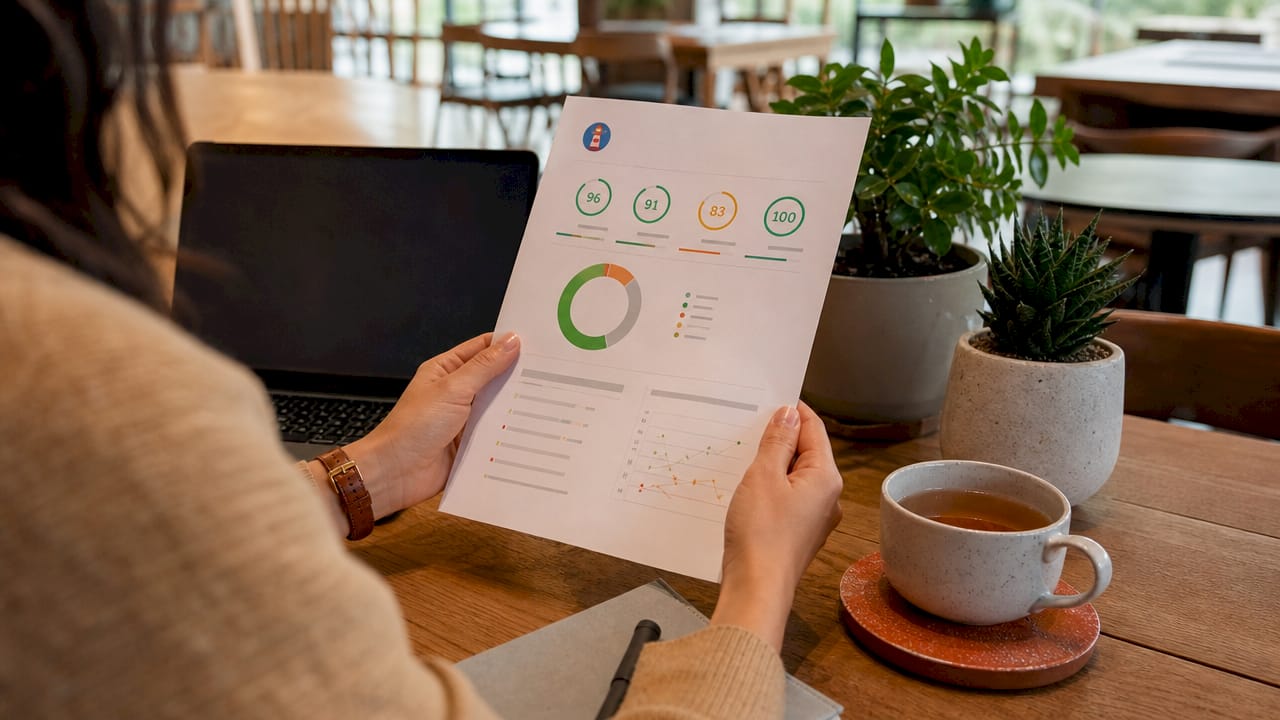
Before any redesign, run a Lighthouse audit on your current store and document your LCP, INP, and Cumulative Layout Shift scores. These become your baseline targets, and every design decision should be measured against them.
How do custom product pages and checkout flows drive more sales?
Conversion gains in eCommerce come from redesigning high-stakes pages like product detail pages and checkout, not from applying a new coat of paint to a generic theme. Two 2026 case studies make this concrete.
Skims rebuilt its Shopify product detail page with a custom architecture focused on three specific improvements:
- Faster mobile load time. The rebuild reduced mobile load time by 38%, directly addressing the largest source of drop-off in their funnel.
- Improved size recommendation flow. A custom interactive sizing tool reduced purchase hesitation and returns.
- Restructured social proof. Reviews and trust signals were repositioned within the page hierarchy to appear at the moment of decision, not buried below the fold.
The result: Skims pushed PDP conversion past 6%, a meaningful lift for a brand already operating at scale. The lesson is not that Skims has a large budget. The lesson is that paid acquisition has a ceiling, and improving your product page is now a top growth lever regardless of store size.
Native took a different approach. The brand migrated to a headless architecture and rebuilt its checkout as a custom three-step flow optimized for subscriptions and mobile users. The outcome was significant.
Custom modal flows, inline payment options like Shop Pay, and subscription UI optimization were all part of that rebuild. None of those elements are available in a standard theme without significant plugin stacking, which itself creates performance drag.
It is worth noting that headless architectures require dedicated frontend engineering resources and carry operational complexity. That tradeoff is real. For most growing stores, a well-executed custom build on WooCommerce or Shopify delivers the majority of these gains without the full headless overhead.
Custom design vs. generic templates: what actually changes?
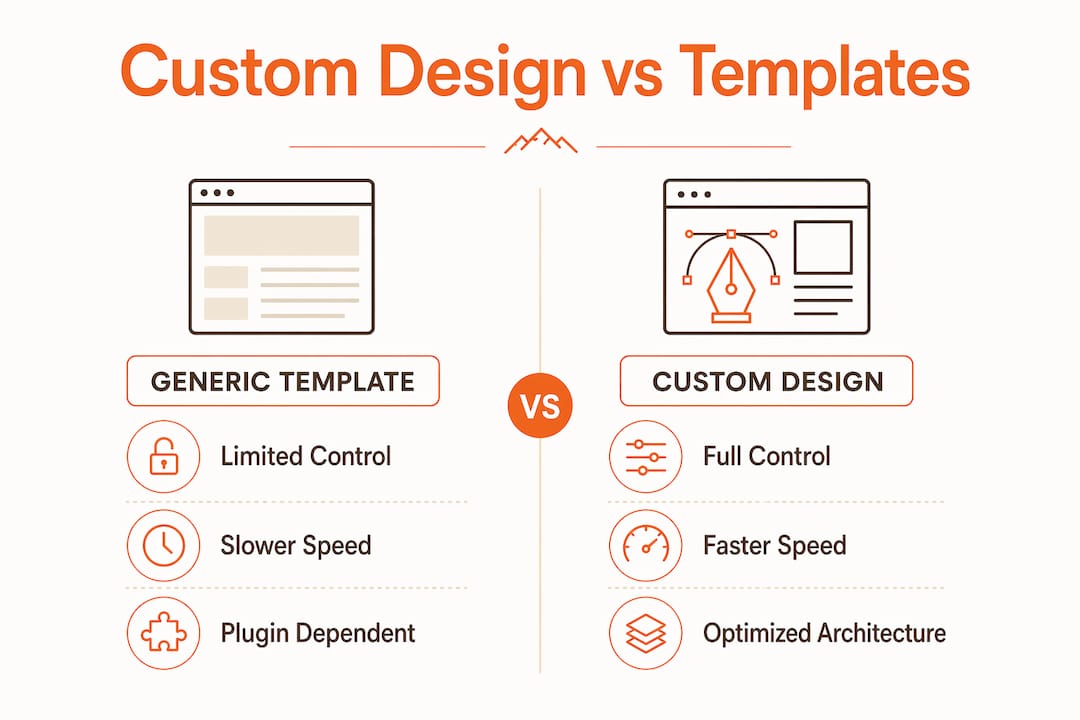
The honest comparison between a custom build and a premium template is not about aesthetics. It is about control, scalability, and the compounding cost of constraints.
| Factor | Generic template | Custom design |
|---|---|---|
| Page speed | Dependent on theme code quality; often bloated | Optimized from the ground up for your catalog |
| Brand differentiation | Limited to color, font, and image swaps | Full visual and interaction design ownership |
| Checkout experience | Constrained by theme structure | Built around your specific conversion funnel |
| Plugin dependency | High; multiple plugins needed for basic features | Low; features built natively into the codebase |
| Scalability | Degrades as catalog and complexity grow | Scales with intentional architecture planning |
| Performance maintenance | Relies on theme developer updates | Controlled by your team or agency |
Shopify enforces performance standards on its free themes and continuously optimizes the platform. That benefits all stores to a degree. But those improvements apply equally to every competitor using the same theme. Custom design is where you pull ahead.
The plugin dependency issue deserves specific attention. A typical template-based store running product reviews, loyalty programs, size guides, upsells, and subscription billing will stack six to ten third-party apps. Each one adds JavaScript to the page. Each one slows your store. A custom build consolidates those functions into the codebase itself, reducing load and giving you cleaner data.
Pro Tip:
Audit your current app stack and calculate the combined JavaScript weight. Tools like GTmetrix or WebPageTest will show you exactly how much each third-party script costs in load time. That number often makes the case for a custom build faster than any sales conversation.
How does custom design build brand identity and customer loyalty?
Custom storefronts optimize conversion assets like product pages and checkout in ways that also reinforce brand identity at every touchpoint. These two goals are not in tension. They are the same goal expressed differently.
When a shopper lands on your store, they form a trust judgment within seconds. That judgment is based on visual coherence, load speed, and whether the experience feels intentional. A custom design communicates that your brand takes itself seriously. A template, even a well-styled one, communicates that you took the fastest available path.
Specific elements that custom design controls for brand and loyalty purposes include:
- Consistent visual language: Typography, color, spacing, and motion are applied uniformly across every page, not just the homepage.
- Personalized user flows: Category pages, filters, and recommendations can be structured around how your specific customers shop, not how a generic shopper might.
- Loyalty and retention touchpoints: Custom account pages, order history displays, and reward program integrations feel native rather than bolted on.
- Branded post-purchase experience: Confirmation pages and transactional emails designed to match your store extend the brand relationship beyond the transaction.
The business case connects directly to lifetime value. A shopper who trusts your store’s experience returns more often and spends more per visit. Branded experiences increase conversions by reinforcing recognition and trust across every customer interaction. Custom design is the foundation that makes every downstream marketing effort more effective. You can learn more about how eCommerce UX drives sales and why the design decisions behind it matter more than most store owners realize.
Key takeaways:
Custom eCommerce design delivers measurable conversion gains, stronger brand identity, and long-term scalability that no generic template can replicate.
| Point | Details |
|---|---|
| Speed is a revenue variable | Stores 100ms slower convert at 3.5% lower rates; custom builds control the architecture that determines speed. |
| High-impact pages drive results | Redesigning product detail pages and checkout, not full-site themes, produces the largest conversion lifts. |
| Templates create compounding constraints | Plugin stacking, limited checkout control, and shared architecture cap your growth potential over time. |
| Brand identity is built in the code | Custom design applies consistent visual language and user flows that templates cannot replicate at depth. |
| Custom builds scale with your business | Intentional architecture handles catalog growth and feature additions without performance degradation. |
What I’ve learned from watching stores outgrow their templates.
I’ve worked on enough eCommerce projects to recognize the pattern. A store launches on a solid premium theme, grows steadily, and then hits a wall. Conversion rates plateau. The app stack gets heavier. The mobile experience starts to feel sluggish. The team starts talking about a redesign, but they’re not sure what to change.
The answer is almost always the same: the template was never built for this store’s specific funnel. It was built for a hypothetical average store. And the gap between average and specific is where revenue lives.
What I tell clients is to start with the two pages that matter most: the product detail page and the checkout. You do not need to rebuild your entire store to see meaningful gains. Skims did not redesign their homepage first. They rebuilt the page where purchase decisions happen. That is the right instinct.
The mistake I see most often is chasing visual trends without benchmarking performance first. A store will invest in a beautiful new design and launch it without measuring LCP or INP before and after. Then they wonder why conversion did not improve. The design looked better, but it loaded slower. Those two things are not mutually exclusive, and a good custom build manages both.
Invest in custom design as a strategic growth lever, not a one-time project. The stores that treat their website as a living asset, with ongoing eCommerce optimization built into their operating rhythm, consistently outperform the ones that launch and leave it alone.
Work with Expedition on your custom eCommerce store.
Expedition is a Cincinnati-based web design and digital creative agency that builds custom eCommerce stores on WooCommerce and Shopify. Every project is handled in-house by a U.S.-based team, from initial strategy through design, development, and ongoing support. The work is conversion-focused from the first wireframe, not just visually polished. If your current store is underperforming or you’re building from scratch, explore Expedition’s custom eCommerce design services to see what a purpose-built store looks like. You can also review Expedition’s design-driven CRO approach if conversion rate improvement is your immediate priority. Contracts are month-to-month with no onboarding fees.
FAQ
Why does custom design improve eCommerce conversion rates?
Custom design lets you build product detail pages and checkout flows around your specific customer behavior rather than a generic template structure. Brands like Skims and Native saw conversion lifts of 6% and 38% respectively after rebuilding these high-impact pages with purpose-built architecture.
How much does site speed affect eCommerce sales?
Stores that are 100ms slower convert at approximately 3.5% lower rates, according to Shopify’s 2026 performance analysis. A 1-second difference in Largest Contentful Paint can mean a 30% gap in conversion between competing stores.
Is a custom eCommerce build worth it for smaller stores?
Yes, especially when focused on the highest-impact pages first. You do not need a full headless rebuild to see gains. A custom product detail page and checkout flow on WooCommerce or Shopify delivers most of the conversion benefit at a fraction of the complexity.
What is the difference between a custom design and a premium theme?
A premium theme offers visual flexibility within a fixed structure. A custom design gives you full control over architecture, performance, checkout flow, and brand integration. The difference becomes most visible as your catalog grows and your app stack expands.
How does custom design support brand loyalty?
Custom design applies consistent visual language, personalized user flows, and native loyalty integrations across every page. That coherence builds trust with repeat shoppers and makes every marketing channel more effective because the destination matches the promise.