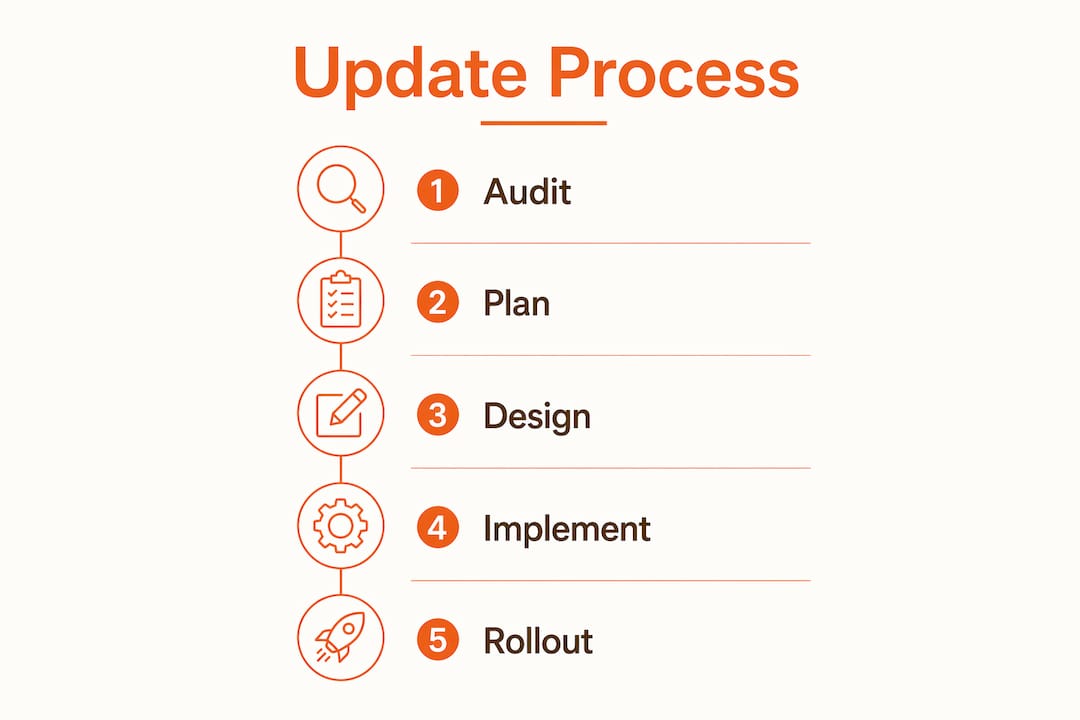
Updating brand identity on an existing site means realigning your visual assets, content, and messaging with your current business strategy to stay relevant and drive customer engagement. This process, formally called a brand refresh or brand identity redesign, goes well beyond swapping out a logo or changing a color palette. A six-point brand refresh plan covers brand audit, customer personas, positioning assessment, visual identity upgrade, content restructuring, and staged rollout. Skipping any of these steps risks losing brand equity you have spent years building. Whether you are a business owner noticing your site feels dated or a marketing professional tasked with improving website identity, this guide walks you through every phase.
What do you need before you update brand identity on an existing site?
Preparation determines whether your brand refresh succeeds or stalls. Most teams jump straight to visual changes and skip the strategic groundwork, which is exactly how refreshes fail.
Start with a brand audit. A brand audit is a structured review of how your current site looks, communicates, and performs against your business goals and market position. During the audit, prioritize your top 20 revenue or traffic-driving pages to protect search visibility during the transition. Those pages carry the most SEO weight and the most conversion value.
Here is what your pre-refresh checklist should include:
- Brand audit documentation: Catalog your current logo files, typography, color codes, and brand guidelines. Identify what is working and what is inconsistent.
- Customer personas: Clarify who you are actually serving today, not who you were targeting three years ago. Personas should reflect current buyer behavior and pain points.
- Positioning assessment: Compare your current market position against competitors and identify gaps. Writing a concise brand thesis before changing any design ensures coherence across the refresh.
- Analytics review: Pull data from Google Analytics, Google Search Console, or similar tools to understand which pages drive traffic and which underperform.
- CMS platform evaluation: Assess whether your current content management system can support the changes you need. Platforms older than 3–5 years may create bottlenecks that make a platform upgrade more effective than a surface-level visual refresh.
The CMS point deserves extra attention. Headless CMS platforms like Strapi or Prismic give marketing teams the ability to update content independently without developer involvement. That kind of editorial autonomy directly supports brand fidelity over time. If your current platform limits what you can change, your visual refresh will hit a ceiling quickly.
Pro Tip:
Before touching a single design file, complete a full brand audit checklist to document your baseline. You cannot measure improvement without knowing your starting point.
How do you plan and execute the visual identity update?
The visual identity system is the most visible part of any brand refresh, but it is also where teams most often make costly mistakes. Updating visual assets without aligning to core business strategy frequently results in lost brand equity and failed refreshes. The visual update must follow the strategic work, not lead it.

Your visual identity system includes four core elements: logo, color palette, typography, and imagery. Each one should be reviewed against your updated brand positioning before any changes are made.
| Update Scope | What Changes | Best For |
|---|---|---|
| Minor Tweak | Logo refinement, color adjustment, font update | Brands with strong equity needing modernization |
| Moderate Refresh | New color palette, updated typography, refreshed imagery style | Brands repositioning within the same market |
| Full Visual Overhaul | New logo, complete design system, new photography direction | Brands entering new markets or targeting new audiences |
Use this table as a starting point for scoping your project. A minor tweak might take two to four weeks. A full visual overhaul can take three to six months when done properly.
Consistency across digital touchpoints is non-negotiable. Your updated visual identity must appear uniformly across your website, email templates, social media profiles, and any digital advertising. Inconsistency signals to customers that your brand is disorganized, which erodes trust faster than an outdated logo ever could.
Working with a branding professional or agency accelerates this phase significantly. Expedition’s brand identity design services cover the full visual identity system, from logo and typography to color systems and usage guidelines, so every element works together rather than in isolation.
Pro Tip:
Build a brand style guide before you update a single page on your site. The style guide becomes the single source of truth for every designer, developer, and content writer involved in the refresh.
What content and structural changes should accompany a brand refresh?
Visual changes without content changes produce a disjointed experience. Your site’s copy, navigation, and information hierarchy need to reflect the same brand story your new visuals are telling.
Follow this sequence when updating content and structure:
- Audit existing content. Review every page against your updated brand messaging. Flag copy that uses outdated language, references old positioning, or no longer reflects your value proposition.
- Rewrite priority pages first. Your homepage, about page, and top service or product pages carry the most weight. Update these before touching secondary pages.
- Restructure navigation. Simplifying navigation and improving information hierarchy increases engagement and retention. Remove redundant menu items and create a clear path from landing page to conversion.
- Implement 301 redirects. If you rename or restructure URLs during the refresh, 301 redirects preserve your existing search rankings by pointing old URLs to new ones. Skipping this step can cause significant traffic loss.
- Check mobile responsiveness and accessibility. Every page you update should be tested on mobile devices and reviewed against WCAG accessibility standards. Mobile-friendliness is a Google ranking factor, and accessibility protects you legally while expanding your audience.
The connection between content architecture and brand identity is direct. A cohesive brand and website work together when the navigation, page structure, and copy all reinforce the same message your visuals communicate.
SEO deserves specific attention during this phase. Avoid changing page titles, meta descriptions, or URL structures without a documented plan. Map every change before implementation and verify redirects are working within 24 hours of launch. Losing search traffic during a brand refresh is one of the most common and preventable mistakes teams make.
| Content Element | Action Required | SEO Risk if Skipped |
|---|---|---|
| Page titles | Update to reflect new brand messaging | Moderate |
| URL structure | Maintain or redirect with 301s | High |
| Meta descriptions | Rewrite for new positioning | Low |
| Internal links | Update anchor text to match new copy | Moderate |
| Image alt text | Refresh to align with new visual language | Low |
How do you roll out a brand identity update without losing SEO or customers?
The rollout phase is where many otherwise well-planned refreshes go wrong. Launch day is the middle of the work, not the end. Ongoing measurement and iteration are what determine whether the refresh actually improves performance.
A staged rollout approach reduces risk significantly. Rather than flipping the switch on every change at once, release updates in phases. Start with lower-traffic pages to test how your CMS handles the new templates and how users respond to the new visual language. Then move to high-traffic pages once you have confirmed everything is functioning correctly.
Key rollout best practices include:
- Align your internal team first. Every person who touches your brand, from sales to customer service, needs to understand the new guidelines before the public sees them. Internal communication is key to smooth transitions and preserving brand equity.
- Update external digital assets simultaneously. Email signatures, social media profiles, Google Business Profile, and partner channels should all reflect the new brand on or before launch day. Inconsistency across channels confuses customers and dilutes the impact of the refresh.
- Set up monitoring before launch. Configure Google Search Console alerts, track keyword rankings for your top pages, and set up conversion tracking so you can measure performance from day one.
- Collect user feedback early. Tools like Hotjar or Microsoft Clarity show you how real users interact with the updated site. Heatmaps and session recordings reveal friction points that analytics alone will not surface.
Pro Tip:
Review common website redesign mistakes before your launch date. Most rollout problems are predictable and preventable with a documented pre-launch checklist.
A modern website redesign is a rare opportunity to make simultaneous decisions on platform, editorial workflow, and content strategy that will affect your site’s performance for years. Treat the rollout as the beginning of an ongoing process, not a finish line.
Key takeaways:
Updating brand identity on an existing site requires strategic alignment across visual design, content, platform capabilities, and rollout execution to preserve brand equity and search performance.
| Point | Details |
|---|---|
| Start with a brand audit | Document your current visual assets, top pages, and positioning before changing anything. |
| Strategy precedes visuals | Write a brand thesis and update personas before touching logo or color palette files. |
| Content must match visuals | Rewrite priority pages and restructure navigation to reflect the new brand story. |
| Protect SEO during rollout | Implement 301 redirects, monitor rankings, and avoid URL changes without a documented plan. |
| Rollout is an ongoing process | Measure performance post-launch and iterate based on user behavior and search data. |
The part most teams get wrong.
I have seen brand refreshes done both ways: the strategic route and the cosmetic shortcut. The cosmetic shortcut is tempting because it is faster and cheaper upfront. You update the logo, pick a new color palette, and call it done. Six months later, nothing has changed in terms of leads, conversions, or customer perception.
The reason is straightforward. A visual refresh without strategic alignment is just decoration. If your brand positioning has not been clarified, your customer personas have not been updated, and your content still tells the old story, new colors will not fix any of that. Customers respond to clarity and consistency, not novelty.
The other mistake I see constantly is underestimating platform limitations. A fresh coat of paint on a CMS that cannot support your content workflow will not improve marketing performance. If your team cannot update pages without a developer, your brand will drift out of alignment within months of launch. Platform choice is a brand decision, not just a technical one.
The teams that get this right treat the refresh as a business project, not a design project. They start with strategy, involve stakeholders early, and plan the rollout with the same rigor they would apply to a product launch. That approach takes more time upfront, but it produces results that last.
Ready to refresh your brand and website together?
Expedition handles brand identity updates and website redesigns as a single, integrated project. The same team that builds your site creates your brand system, writes your content strategy, and manages your rollout. Nothing gets handed off to a separate vendor. If you are ready to revamp your site’s branding with a strategy-driven approach, Expedition’s website redesign services and custom web design are built for exactly this kind of project. Reach out to start a discovery conversation and get a clear picture of what your refresh should include.
FAQ
What is a brand audit and why does it come first?
A brand audit is a structured review of your current visual assets, messaging, and market positioning. It comes first because you cannot make informed design decisions without understanding what is working and what is not.
How long does a brand identity update take?
A minor visual tweak can take two to four weeks. A full brand identity redesign with content restructuring and staged rollout typically takes three to six months depending on site size and team capacity.
Will updating my brand identity hurt my SEO?
A brand refresh can hurt SEO if URL structures change without 301 redirects or if page titles are altered without a documented plan. Proper planning and redirect implementation protect your search rankings throughout the process.
Do i need to rebuild my entire site to refresh my brand?
No. Many brand identity updates are applied to an existing site without a full rebuild. However, if your CMS platform is more than three to five years old, a platform upgrade may deliver better long-term results than a surface-level visual refresh.
What is the difference between a brand refresh and a rebrand?
A brand refresh updates and modernizes your existing identity while preserving core brand equity. A rebrand replaces the identity entirely, typically when a business is entering a new market or recovering from significant reputation damage.